
Windshield Replaced? Why Your Insurance Expects an ADAS Calibration
October 19, 2026 Every fall, the first hard freeze in the North Valley brings the same surprise for a lot of drivers: a car that started fine all summer suddenly cranks slowly, or just clicks. It feels like the cold killed the battery overnight, but the real damage usually happened months earlier, during the long hot stretch of June and July. Albuquerque typically sees its first freeze from late October into early November, which makes now the right time for a battery test.
- Summer heat does the lasting damage to a battery; cold weather is what exposes it.
- A professional battery test measures cranking ability, not just voltage.
- Low voltage can confuse modern electronics, including driver assistance systems.
Heat Does the Damage, Cold Sends the Bill
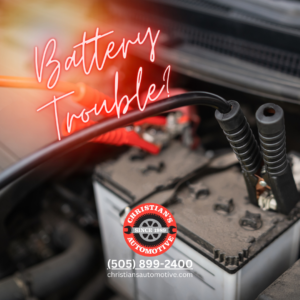 A car battery makes electricity through a chemical reaction between lead plates and an acid electrolyte. Heat speeds up that chemistry, which sounds helpful, but it also speeds up corrosion of the internal plates and evaporation of the electrolyte. After a summer of parking lots on Coors and afternoon drives across the West Mesa, a battery can lose a real share of its capacity without showing any sign of it. In warm weather, the engine turns over easily, so a weakened battery still has enough to get the job done.
Cold changes the math on both sides. The chemical reaction inside the battery slows down, so it delivers less power, while engine oil thickens and the starter has to work harder to turn the engine. Think of it like a runner who pulled a muscle in July but kept jogging on flat ground. The injury only shows up when the first steep hill arrives, and for your battery that hill is the first cold morning.
Signs Your Battery Is Running Out of Reserve
Batteries rarely fail without some warning, though the warnings are easy to dismiss. Pay attention if you notice any of these:
- The engine cranks more slowly than usual, especially on cool mornings.
- Headlights or dash lights dim when you start the car.
- A battery or charging warning light comes on.
- White or blue green corrosion builds up on the terminals.
- The battery is three or more years old.
That last point matters more in the desert than most drivers expect. Batteries here often wear out sooner than the same battery would in a cooler climate, which is why we talked about heat as the hidden culprit in our post on summer heat versus cold. If yours is original to a vehicle that is several years old, a test is a smart move even if it has never given you trouble.
What a Real Battery Test Tells You
 A quick voltage reading can be misleading. A battery can show a healthy surface charge at rest and still collapse when the starter asks for hundreds of amps. A proper test looks at how much cranking power the battery can still deliver compared to its rating, and a good technician will also check the charging system. A weak alternator or a loose, corroded cable can make a healthy battery look bad, and replacing the battery would not fix either one.
That is why our battery and electrical service checks the whole circuit: battery, cables, terminals, starter draw and alternator output. If there is a slow drain that empties the battery overnight, our diagnostic team can track down which circuit is staying awake after you park. The goal is to replace only what actually needs replacing. Groups like AAA New Mexico have long encouraged drivers to test batteries before winter for the same reason.
Why Your Battery Matters to Your Safety Systems
Modern vehicles contain dozens of computer modules, and they are sensitive to voltage. When a battery is weak, the voltage can dip during starting and trigger a strange mix of warning lights, including messages about lane keeping, collision warning or other driver assistance features. In many cases the systems are fine and simply lost power mid-startup. Some vehicles also need a steering angle reset, a window or sunroof relearn, or a battery registration step after a new battery goes in.
Vehicles with automatic start stop often use an AGM battery, which is built for frequent restarts and should be replaced with the same type. Putting a standard battery in its place can shorten its life and confuse the charging strategy. If you see ADAS warnings after a battery problem, it is worth having the systems scanned rather than assuming a camera or sensor has failed.
Frequently Asked Questions
How long does a car battery last in Albuquerque?
It varies with the battery, the vehicle and how you drive, but the heat here tends to shorten battery life. Once a battery reaches about three years old, an annual test is a good habit.
Can I test my battery with a voltmeter at home?
A voltmeter gives you a rough idea of charge, but it cannot tell you how the battery performs under load. A load or conductance test gives a much clearer answer.
Will jump starting a dead battery fix it?
A jump start gets you moving, but it does not restore lost capacity. If the battery needed a jump, have it tested before the next cold morning.
The first freeze does not have to be the day your car refuses to start. A quick test now tells you whether your battery has the reserve to get through the winter.
As an AAA Approved Auto Repair shop and a NAPA AutoCare Center, Christian’s stands behind every service with a 5-Year Warranty. Book a battery test before the cold mornings settle in.
Christian’s Automotive and Tire
8811 2nd Street NW
Albuquerque, NM 87114
(505) 899-2400