
Labor Day Road Trip Ready: Five Checks Before the Long Weekend
August 31, 2026
Fall Car Care in Albuquerque: Ready for Cool Mornings and Fiesta Traffic
September 25, 2026Every Albuquerque driver knows the alignment rule. You hit one of our famous potholes on Coors or bump a wheel into a curb, the steering wheel sits crooked, and you book an alignment. Nobody debates it. Here is the part most drivers have not caught up with yet: if your vehicle was built in the last several years, it carries cameras and radar sensors that steer, brake and warn on your behalf, and those sensors go out of aim for exactly the same kinds of reasons your wheels do. Putting them back on target is called ADAS calibration, and it is quickly becoming as routine as the alignment itself.
- The logic is identical to an alignment: impacts, repairs and worn parts knock precision components out of aim, and a measured adjustment puts them back.
- Most vehicles from around 2018 onward carry ADAS features that need calibration after a windshield replacement, collision repair, suspension work, an alignment or a tire size change.
- Christian’s calibrates in house on OEM-spec equipment, usually same day, with documentation for your records and your insurer.
Frequently Asked Questions
How long does ADAS calibration take?
Most vehicles are done in one to three hours, and we complete the large majority same day. Complex multi-sensor vehicles can take longer, and we tell you before we start.
Does insurance cover calibration?
When calibration follows covered work such as a windshield replacement or collision repair, insurers routinely pay for it as part of the claim. We provide the documentation that supports it.
My car seems to drive fine. Do I still need it?
A misaimed camera gives no symptoms in normal driving. The error only shows in the moment the system has to act, which is exactly the moment you cannot test yourself.
The Alignment Everyone Understands
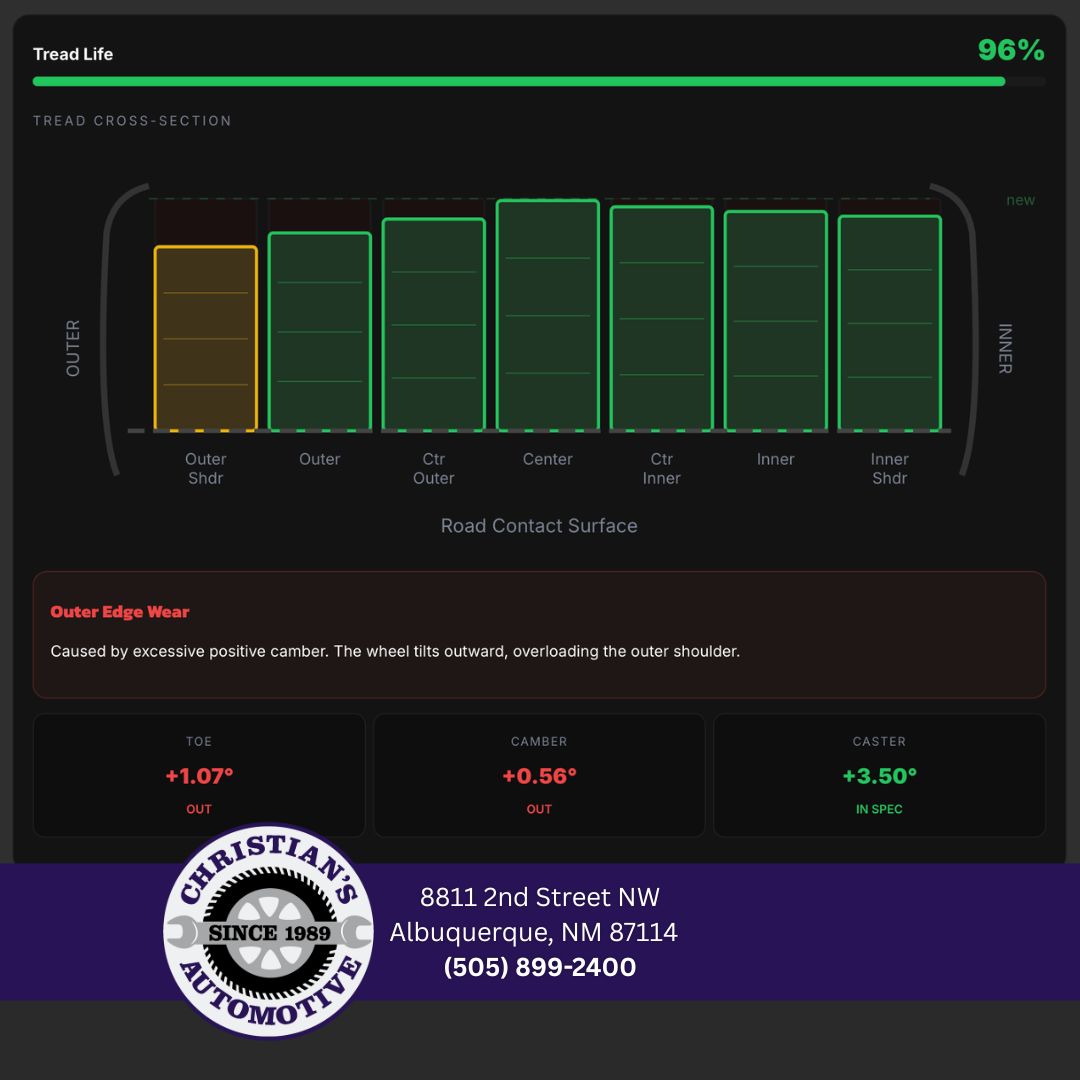
An alignment exists because your wheels are aimed, not just attached. A fraction of a degree of misalignment scrubs off tire tread, pulls the car toward the shoulder and makes the vehicle feel vague at highway speed. The fix is measurement: the car goes on a rack, precise angles are read against factory specifications, and adjustments bring everything back to spec. Drivers accept this because the cause and effect are easy to feel through the steering wheel and easy to see on the edge of a worn tire. We often catch the evidence during a tire rotation before the driver has noticed anything at all.
Your Car’s Cameras Are Aimed the Same Way
Advanced driver assistance systems, ADAS for short, are the features that have quietly become standard equipment: automatic emergency braking, adaptive cruise control, lane keeping, blind spot monitoring. The National Highway Traffic Safety Administration reached an agreement with automakers that made automatic emergency braking essentially universal on new vehicles, and NHTSA’s driver assistance guidance is clear about why: these systems prevent crashes when they work as designed. Working as designed depends on aim. A forward camera mounted at the windshield reads lane lines hundreds of feet ahead, so an error of one degree at the glass becomes a many-foot error down the road. The system does not know it is misaimed. It simply brakes late, warns at the wrong moment, or reads the shoulder as your lane.
When Calibration Is Called For
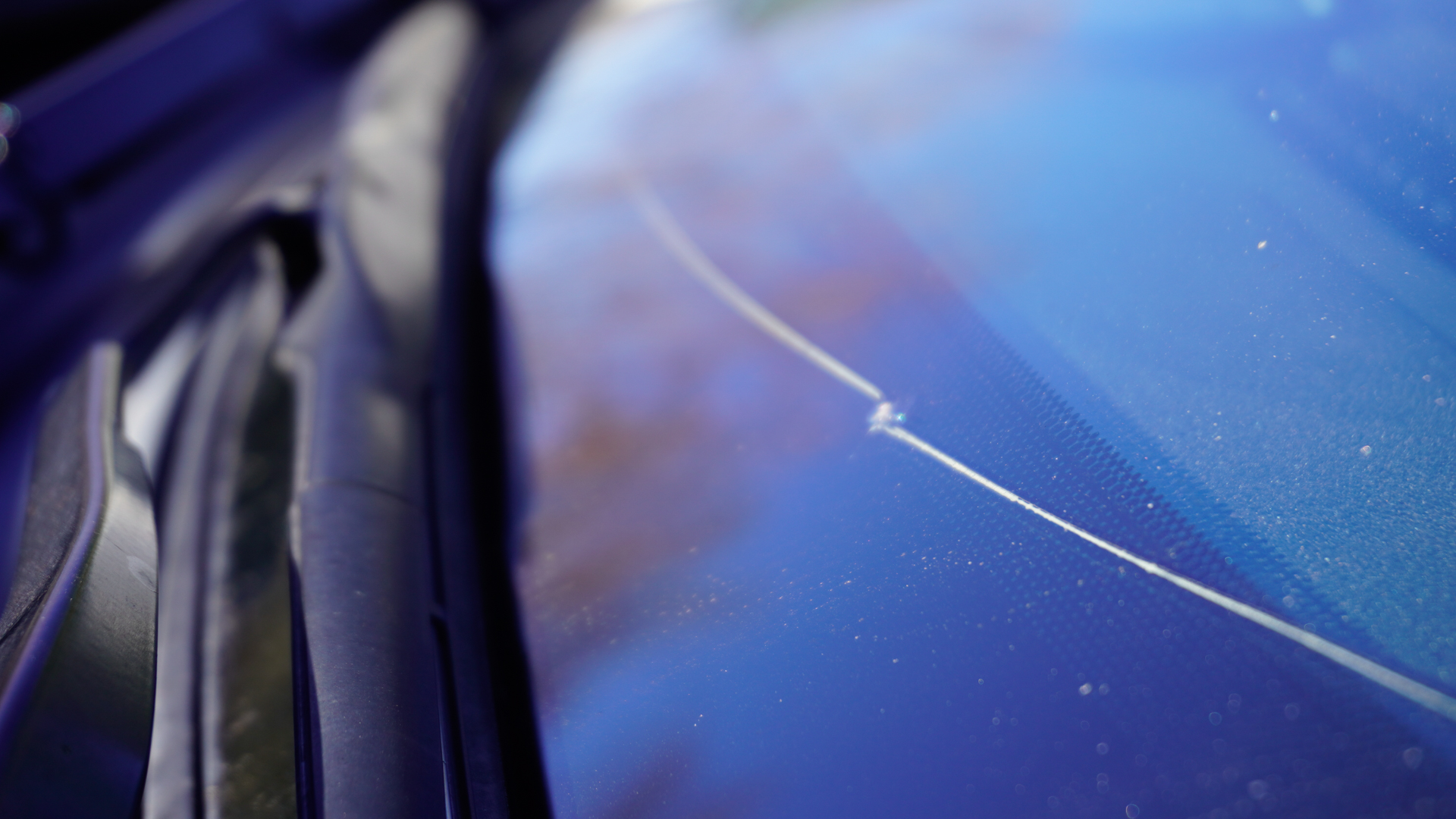
Our first bit of advice with windshields is that you have your alignment done first, then replace your windshield, and then finally have your ADAS calibrated. These steps will insure that your vehicle is properly tuned once the new windshield is in. Most glass companies are not going to consider your alignment or your ADAS. This can leave your system out of alignment.
The triggers are the ordinary events of owning a car in New Mexico. A windshield replacement moves the camera’s window on the world, which is why glass work is the single most common reason for calibration. A collision repair, even a minor bumper or fender job, can disturb radar brackets. Suspension work, a lift or leveling kit, or a change in tire size alters the vehicle’s ride height and with it every sensor’s viewing angle. And yes, an alignment itself belongs on the list, because calibration is referenced to the direction the vehicle actually travels. If the thrust line moves, the cameras should be checked against it. That is why we raise calibration on alignment and tire tickets for newer vehicles at the counter.
How Calibration Works at Christian’s
Our ADAS calibration service follows the factory procedure for your specific vehicle. The car is positioned on a level floor at measured distances from manufacturer-specified targets, the calibration rig and scan tool talk the cameras and radar through their re-aim, and a road test validates the result. Most calibrations are completed the same day, and every job leaves with documentation showing the procedure performed and the values achieved, which body shops and insurers increasingly expect to see. If a fault code or a damaged sensor turns up along the way, our diagnostics team handles it under the same roof.
As an AAA Approved Auto Repair shop and a NAPA AutoCare Center, Christian’s stands behind every service with a 5-Year Warranty. If your vehicle has had glass, body, suspension or tire work since its last calibration, schedule an appointment and we will make sure its safety systems are aimed where the road actually is.
Christian’s Automotive and Tire
8811 2nd Street NW
Albuquerque, NM 87114
(505) 899-2400