Spring Tire and Alignment Check: What Albuquerque Drivers Should Do Before Summer Heat Arrives
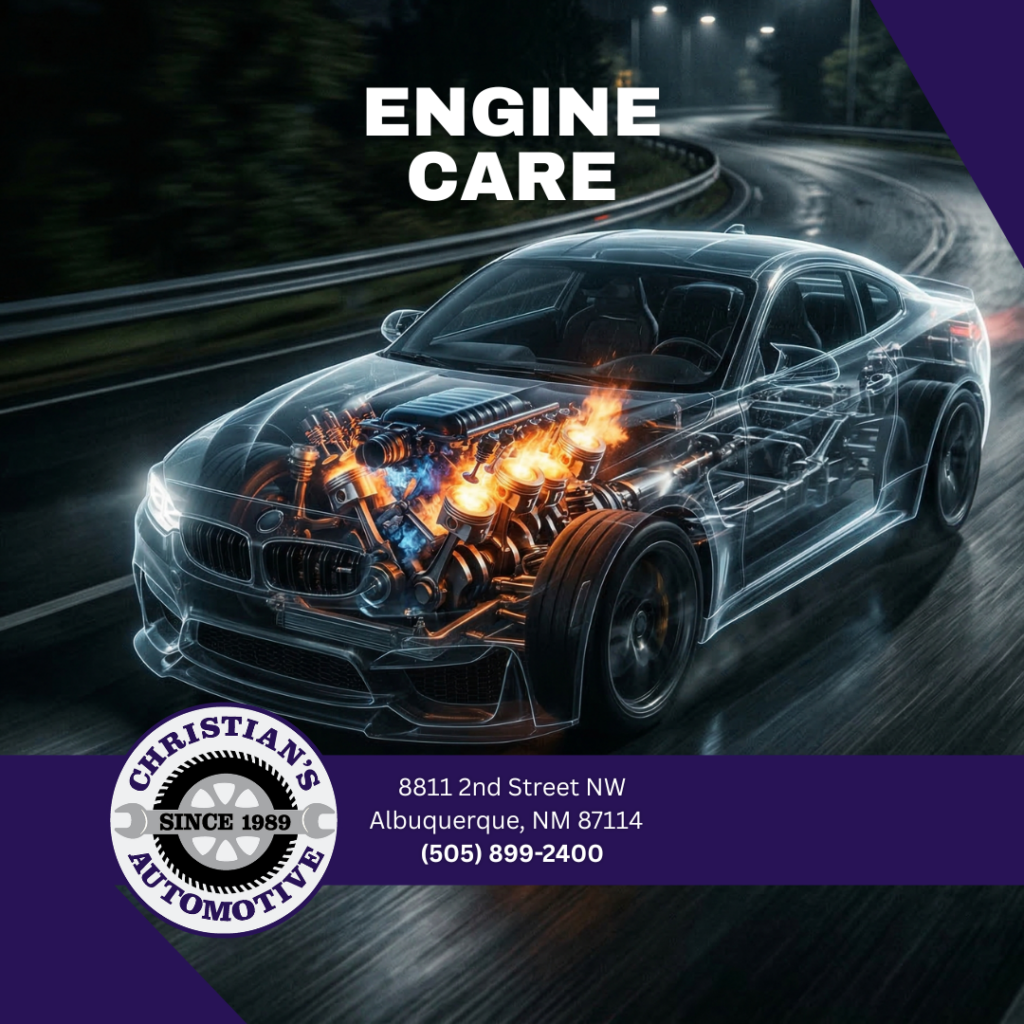
March 30, 2026Your engine oil gets all the attention, and it deserves it. But if oil changes are the only engine maintenance on your radar, you’re leaving a lot of protection on the table. The systems that keep your engine running cool, clean, and efficient all have their own maintenance intervals, and Albuquerque’s desert heat accelerates wear on every one of them.
- Coolant, transmission fluid, and brake fluid all degrade with heat and time, often without visible warning signs
- Air and fuel filters directly affect engine performance, fuel economy, and long-term component health
- Belts and hoses operate under constant thermal stress in our climate and can fail without advance notice
The Fluids That Protect Everything Else
Engine oil lubricates internal moving parts, but your vehicle relies on several other fluids to function safely. Coolant regulates engine temperature by cycling through the radiator and engine block, absorbing heat and dissipating it. Over time, the chemical additives in coolant break down, reducing its ability to prevent corrosion inside your cooling system. In a climate where your engine regularly operates in triple-digit ambient temperatures, degraded coolant can mean the difference between a normal drive home and an overheated engine on Paseo del Norte.
Transmission fluid serves a similar role for your transmission, lubricating gears and clutch packs while also acting as a hydraulic fluid that enables smooth shifting. Heat is the primary enemy of transmission fluid, and Albuquerque delivers heat in abundance. When transmission fluid darkens from its original bright red to a brownish color, it has lost much of its protective capacity. Vehicles with continuously variable transmissions and hybrids have specific fluid requirements that differ from conventional automatics, so the right fluid matters as much as the right interval.
Brake fluid is hygroscopic, which means it absorbs moisture from the air over time. That moisture lowers the fluid’s boiling point. Under heavy braking, such as descending from the Sandia Mountains or navigating stop-and-go traffic on I-25, overheated brake fluid can boil and create air bubbles in the lines. The result is a soft pedal and reduced stopping power at the worst possible moment. A brake fluid flush every two to three years replaces contaminated fluid with fresh fluid that performs as designed.
Filters: The Quiet Performers
Your engine breathes air, and the quality of that air directly affects combustion efficiency and internal cleanliness. The engine air filter catches dust, sand, and debris before it enters the intake. In the high desert, where wind-driven particulates are a daily reality, air filters work harder and clog faster than the manufacturer’s recommended interval might suggest. A restricted air filter forces the engine to work harder to draw air, reducing fuel economy and power output.
The cabin air filter protects you rather than the engine, but it’s worth mentioning because it’s frequently overlooked. It filters the air flowing through your heating and air conditioning system. A clogged cabin filter means your A/C has to push harder to move the same volume of air, which puts additional load on the blower motor and reduces cooling efficiency when you need it most.
Fuel filters, whether they’re inline or integrated into the fuel pump assembly, keep contaminants out of your fuel injectors. Modern injectors operate with extremely tight tolerances and spray fuel in precise patterns. Even small particles can disrupt that spray pattern, leading to rough idle, reduced power, and higher emissions.
Belts and Hoses Under Desert Stress
The serpentine belt powers your alternator, water pump, power steering pump, and air conditioning compressor from a single continuous loop. It’s made of rubber compounds that resist heat and friction, but every material has its limits. Albuquerque’s sustained summer heat accelerates the hardening and cracking of belt material. A serpentine belt failure on a 100-degree day means everything it drives stops working simultaneously. Your engine overheats within minutes because the water pump stops circulating coolant. Your battery drains because the alternator stops charging. Your power steering disappears.
Coolant hoses share the same vulnerability. They sit in the hottest part of the engine bay, carrying fluid that can reach 200 degrees or more. Over years of heat cycling, rubber hoses soften near the clamp points and become prone to splitting. A visual inspection during routine service catches the early signs of deterioration: swelling, soft spots, surface cracking, or seepage at the connections.
Bringing It All Together
None of these items require frequent attention. Most fluid flushes happen every 30,000 to 60,000 miles. Filters and belts follow similar long-interval schedules. The key is tracking them alongside your oil changes rather than waiting for a symptom to appear. A multi-point inspection covers all of these systems in a single visit, giving you a clear picture of what needs attention now and what can wait.
At Christian’s Automotive, we check these systems as part of our standard service process because we’d rather show you a belt that’s starting to crack than replace an engine that overheated on the freeway. That’s the kind of preventive care that saves real money and keeps your family safe on the road.
Christian’s Automotive and Tire
8811 2nd Street NW
Albuquerque, NM 87114
(505) 899-2400